How an Autism Clinic Calculator Helps Estimate Startup Costs
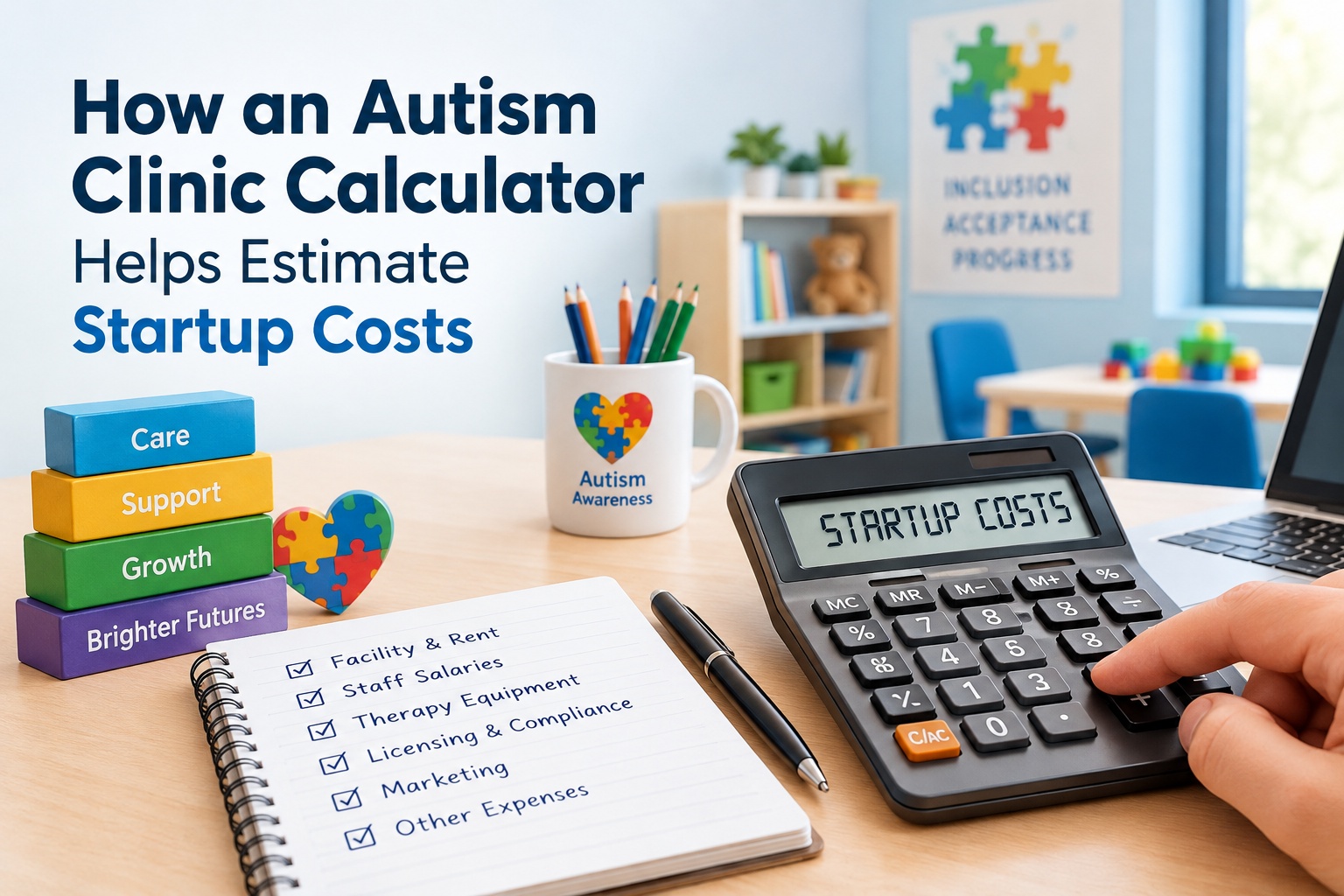
Summary: Opening an autism clinic requires careful financial planning. An autism clinic calculator helps you estimate startup costs, test different scenarios, plan funding, and understand when you might break even. While it’s not a guarantee, it replaces guesswork with clarity. SOS Franchising offers an ROI calculator and full support to help you get started. |
If you’ve ever thought about opening an autism therapy clinic, you’ve probably had this moment: you’re excited about the mission, you can picture the waiting room and the therapy rooms, and then a single question stops you cold. How much is this actually going to cost?
It’s a fair question, and one that deserves a real answer before you sign a lease or write a check. Guessing can get expensive, so many aspiring clinic owners start with an autism clinic calculator. Here’s how a tool like that works, what it can and can’t tell you, and how to get the most out of it.
Why Startup Costs Feel So Hard to Pin Down
Opening an ABA clinic isn’t like opening a coffee shop. You’re building a healthcare-adjacent business with licensed staff, insurance billing, and a physical space designed for children. The costs come from many directions, and they don’t all show up at once.
A few things make budgeting tricky:
Location matters a lot. Rent, build-out costs, and local wages vary widely from one city to the next.
Revenue doesn’t start on day one. Insurance credentialing and billing cycles mean there’s a gap between opening your doors and getting paid.
Clinic size changes everything. A small center with a handful of clients has a very different budget than a larger one with a full team.
Hidden line items add up. Furniture, therapy materials, software, signage, and insurance are easy to underestimate.
That’s where a calculator comes in.
What an Autism Clinic Calculator Actually Does
Think of it as a structured way to organize your assumptions. Instead of staring at a blank spreadsheet, you plug in key variables, and the calculator turns them into a clearer financial picture.
Most calculators ask for inputs like:
Your target location or market
Expected number of clients (your caseload)
Average reimbursement or revenue per client
Staffing needs and estimated payroll
Rent and facility costs
Working capital you plan to set aside
From there, you get an estimate of what you’ll need to launch, and often a projection of how revenue and expenses might play out over time. It won’t be perfect, but it turns “I have no idea” into “here’s a realistic starting range.”
The Real Benefits of Running the Numbers Early
1. You see the full picture, not just the franchise fee
It’s easy to fixate on one big number, like a franchise or sign-up fee, and forget everything else. A calculator pushes you to account for the whole startup budget: build-out, equipment, hiring, marketing, and the working capital that keeps you afloat in the early months.
2. You can plan your funding with confidence
Whether you’re considering an SBA loan, conventional financing, or using retirement funds, lenders will want to see that you’ve thought this through. Walking into a conversation with realistic numbers makes you look prepared, and it helps you borrow the right amount instead of too little or too much.
3. You can test different scenarios
What if you start smaller? What if your caseload grows slower than expected? What if rent in your area is higher than you assumed? A calculator lets you adjust one variable at a time and see what happens, which is far easier than rebuilding a budget from scratch each time.
4. You get a clearer sense of timing
Understanding when you might reach break-even is just as important as knowing the startup cost. Many new owners are surprised by how much runway they need. A good calculator helps you plan for that early stretch so you aren’t caught off guard.
5. You can decide if this is right for you
Sometimes the numbers reveal that now isn’t the right time, or that a different approach fits better. That’s a valuable result. It’s much better to learn that on a screen than after you’ve signed a lease.
A Quick Look at Typical Startup Ranges
For context, SOS Franchising reports that the total startup cost for one of its ABA clinics is usually around $500,000. That figure includes the franchise fee, training, licensing, equipment, furniture, and six months of working capital. Its published range runs from roughly $350,000 to $800,000, depending on factors like location and build-out. The company also lists a $45,000 sign-up fee and a 5% monthly royalty capped at $5,000.
Keep in mind that these are general figures, and your own costs will depend on your market and choices. That’s exactly why running a calculator with your specific details is so useful.
Tips for Getting Honest, Useful Results
A calculator is only as good as what you put into it. To get numbers you can trust:
Be conservative with revenue. It’s safer to underestimate early income than to assume a full caseload right away.
Pad your expenses. Unexpected costs are common, so build in a cushion.
Research local rent and wages. Check real listings and job postings in your area instead of guessing.
Account for slow starts. Credentialing and ramp-up take time, so plan for a few lean months.
Revisit your numbers often. Update the calculator as you learn more about your market.
A Calculator Is a Starting Point, Not a Promise
It’s worth saying clearly: no calculator can guarantee results. It gives you estimates based on the information you provide, and real-world performance will vary. Think of it as a planning aid, not a crystal ball.
The best next step after running your numbers is to talk with people who’ve done it. Ask existing clinic owners about their real costs, their early challenges, and what they’d do differently. Review any official franchise disclosure documents carefully, and consider speaking with a financial advisor or attorney before making a decision.
Final Thoughts
Opening an autism clinic is a meaningful way to build a business and support families in your community. But passion works best when it’s paired with a solid plan. An autism clinic calculator helps you replace uncertainty with clarity, so you can decide with your eyes open and plan for a strong start.
If you’re ready to see what your own numbers might look like, SOS Franchising is a great place to begin. As the nation’s first ABA franchise, it offers an ROI calculator, guidance on site selection and funding, and hands-on training and support. You don’t need prior autism experience to get started. Visit SOS Franchising today to explore the numbers and take the first step toward opening your own clinic.
FAQs
1. What is an autism clinic calculator?
It’s an online tool that helps you estimate the costs of launching an ABA clinic. You enter details like location, caseload, staffing, and rent, and it gives you a projected startup budget and revenue outlook.
2. How much does it cost to open an autism clinic?
Costs vary by location, size, and build-out. SOS Franchising reports a typical total startup cost of around $500,000, with a range of roughly $350,000 to $800,000, including six months of working capital.
3. Are the calculator’s results guaranteed?
No. A calculator provides estimates based on the information you enter. Actual results depend on your market, staffing, reimbursement rates, and how quickly you build your caseload.
4. What costs should I include besides the franchise fee?
Be sure to account for build-out, furniture, therapy materials, software, insurance, marketing, payroll, and working capital. Many new owners underestimate these, so it helps to add a cushion.
5. Do I need autism or healthcare experience to open a clinic?
Not necessarily. SOS Franchising states that prior autism or healthcare experience isn’t required, but strong leadership skills and a willingness to follow a proven system are important.